
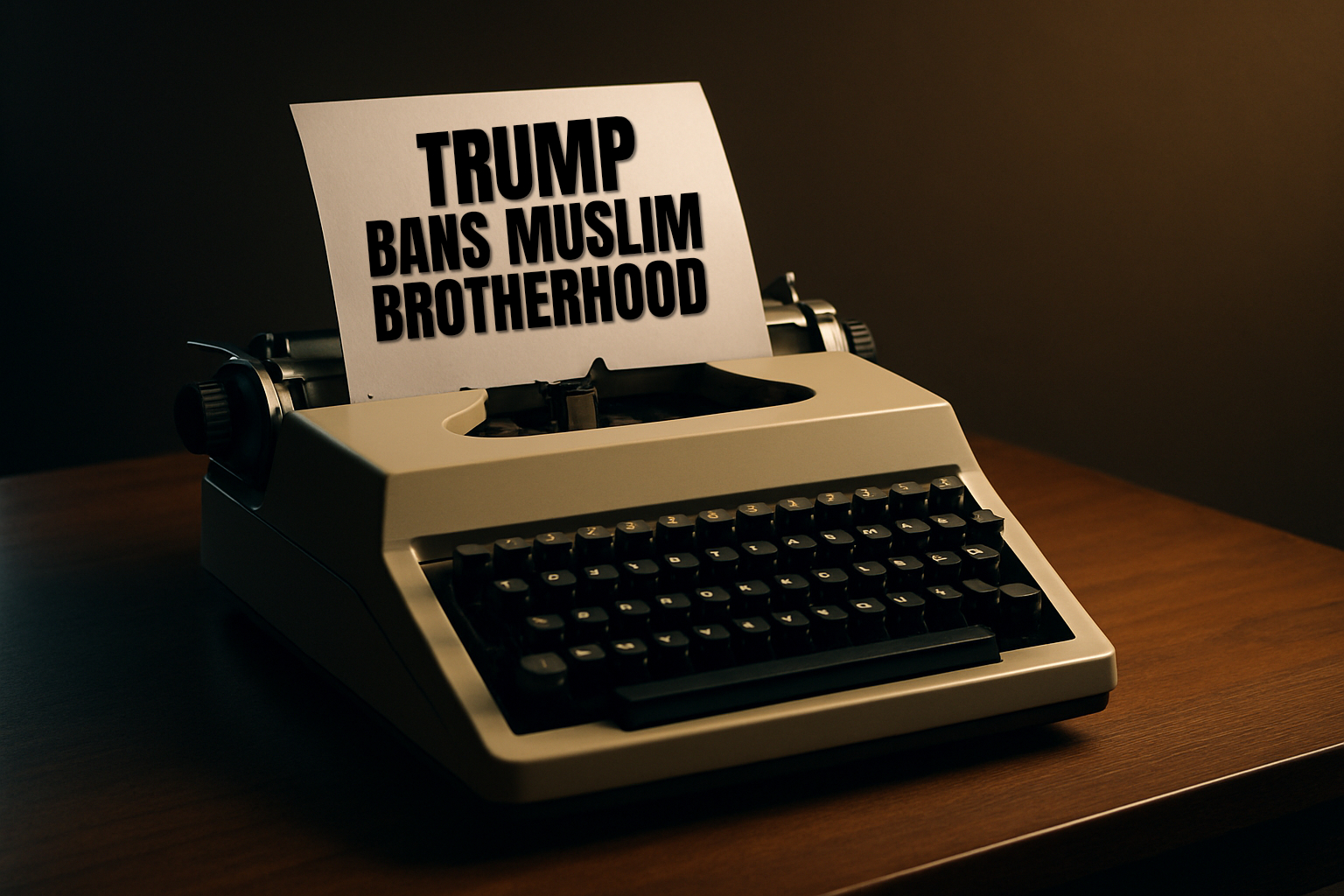
For years, the United Kingdom has taken a cautious, almost detached stance on the Muslim Brotherhood. The 2015 government review acknowledged its ideological risks, yet stopped short of recommending proscription. That position has remained unchanged despite global shifts, regional evidence and mounting pressure from allies.
But now the question has returned with new force.
With the United States moving to designate certain chapters of the Muslim Brotherhood as terrorist organisations, and with many of Britain’s closest allies in the Islamic world having already taken the step years ago, can the UK continue to stand apart?
Or does staying out of alignment weaken Britain’s credibility in a world where alliances matter more than ever?
This is not a question about religion. It is a question about statecraft, stability and strategic coherence.
A growing consensus among the UK’s allies
The list of nations that have banned or proscribed the Muslim Brotherhood is striking. It includes:
- Egypt
- Saudi Arabia
- the United Arab Emirates
- Bahrain
- Jordan
- Russia
- and now, the United States is initiating the same process
These are not fringe states or ideological outliers. They are countries with direct experience of the Brotherhood’s influence within their borders. Many of them are key British allies in intelligence sharing, counterterrorism, trade and diplomacy. When so many regional partners independently conclude that the Brotherhood is a destabilising force, it raises a legitimate question.
What do they know that we are choosing not to act upon?
Why Islamic governments themselves act against MB
Perhaps the most striking element of this landscape is that the strongest opposition to the Muslim Brotherhood comes not from the West, but from Muslim-majority nations. These governments perceive the movement not as a theological threat but as a political one. The Brotherhood builds parallel social structures, challenges state religious authority, and promotes a vision of political Islamism that directly competes with ruling systems.
When Islamic nations decide that the Brotherhood threatens their national stability, that judgement should not be dismissed lightly. They have lived with the movement far longer than Europe has, and often with far more visible consequences.
If these countries conclude that proscription is necessary, it strengthens the case for the UK to re-examine its own stance.
The United States shifts the centre of gravity
The recent move from Washington changes the global equation. Once the US designates any organisation as a terrorist threat, allied nations face questions of alignment. This matters especially for Britain at a moment when national influence is fragile, economic headwinds are strong, and political uncertainty is rising.
Remaining out of step with Washington, while also diverging from key partners in the Middle East, carries diplomatic costs. It signals fragmentation at a time when Britain needs cohesion with its allies more than it has for decades.
Aligning with the United States on this issue would not be a radical departure. It would simply bring the UK back into the mainstream of its own alliances.
Why a UK shift may now be the responsible choice
The argument for reassessing the Brotherhood in the UK is not rooted in panic, nor in copying foreign governments blindly. It is rooted in three sober realities.
1. Our allies have acted because they perceive real-world threats.
When multiple nations independently ban the same movement, and those nations have deep cultural, historical and security expertise in the region, their judgement deserves respect.
2. The UK risks becoming the outlier in its own alliance network.
If Washington, Riyadh, Cairo, Abu Dhabi, Amman and others converge on the same conclusion, the UK standing apart begins to look like hesitation rather than strategic policy.
3. Global politics has entered a more decisive phase.
Uncertain times demand coherent alliances. Britain may soon face leadership changes or new political pressures. Aligning with its partners now strengthens its place in the international order rather than eroding it.
The question Britain must answer
If both our Western and Middle Eastern allies see the Muslim Brotherhood as a destabilising force, and if they have already taken action to restrict it, does Britain position itself wisely by remaining outside that consensus?
Or does it risk appearing slow, hesitant and strategically adrift at a moment when clarity and alignment are essential?
This is not a call for automatic proscription. It is a call for an honest reassessment, grounded in updated intelligence and shaped by the evolving global context.
In a world where Britain must work harder for influence, staying in step with our allies could be a wise and stabilising move.
Hope isn’t what they promise you. It’s how you carry on when they don’t deliver. — Dave Carrera


